


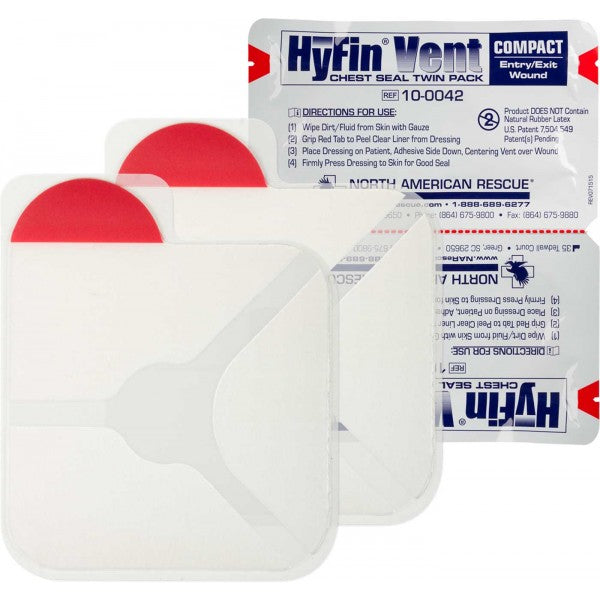


Hyfin Vent Compact Chest Seal Twin Pack
- Australian veteran owned since 2010
- Free AU shipping over $250
- 99% orders shipped within 24 hours
- In stock, ready to ship
- Backordered, shipping soon
HyFin Vent Compact Chest Seal Twin Pack — Vented Occlusive Dressing for Penetrating Chest Wounds
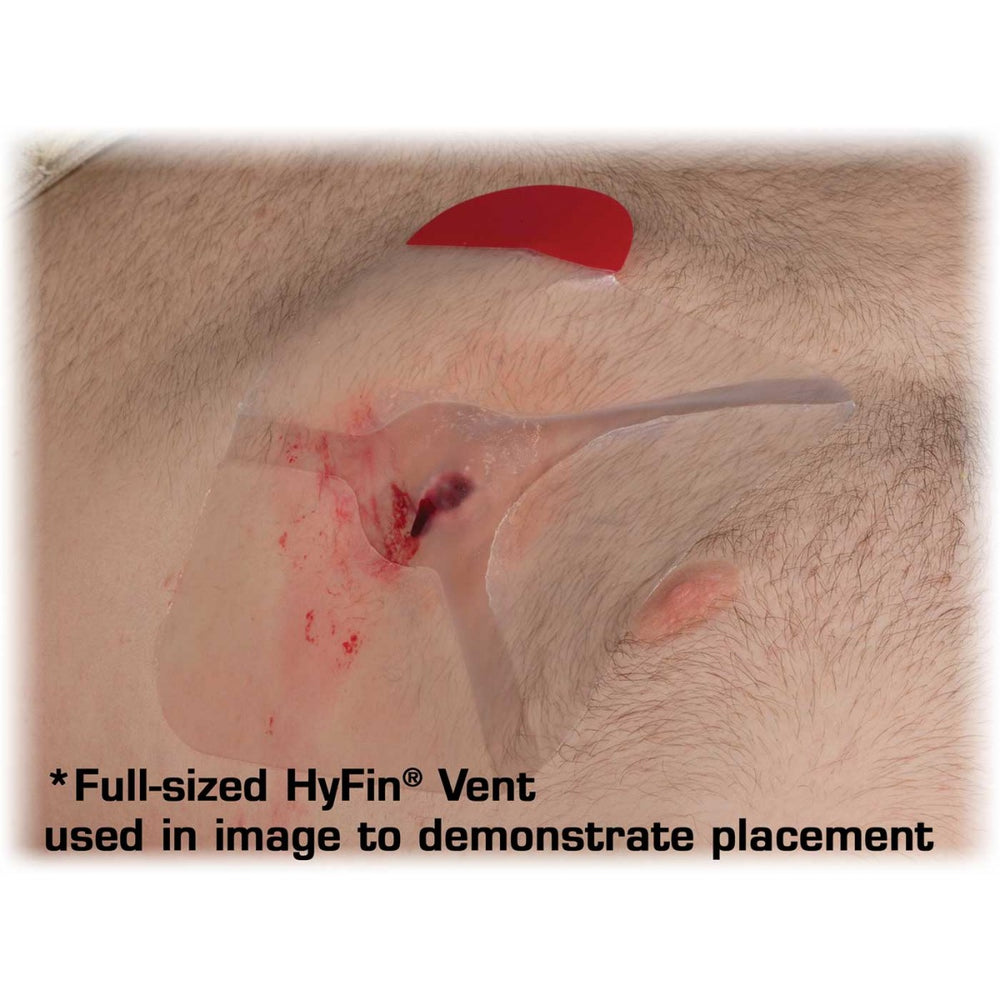
The HyFin Vent Compact Chest Seal is the current standard vented occlusive dressing for penetrating chest trauma — trusted by military medics, paramedics, and tactical first responders worldwide. The twin pack provides two individually sealed chest seals to treat both entry and exit wounds from a single penetrating injury.
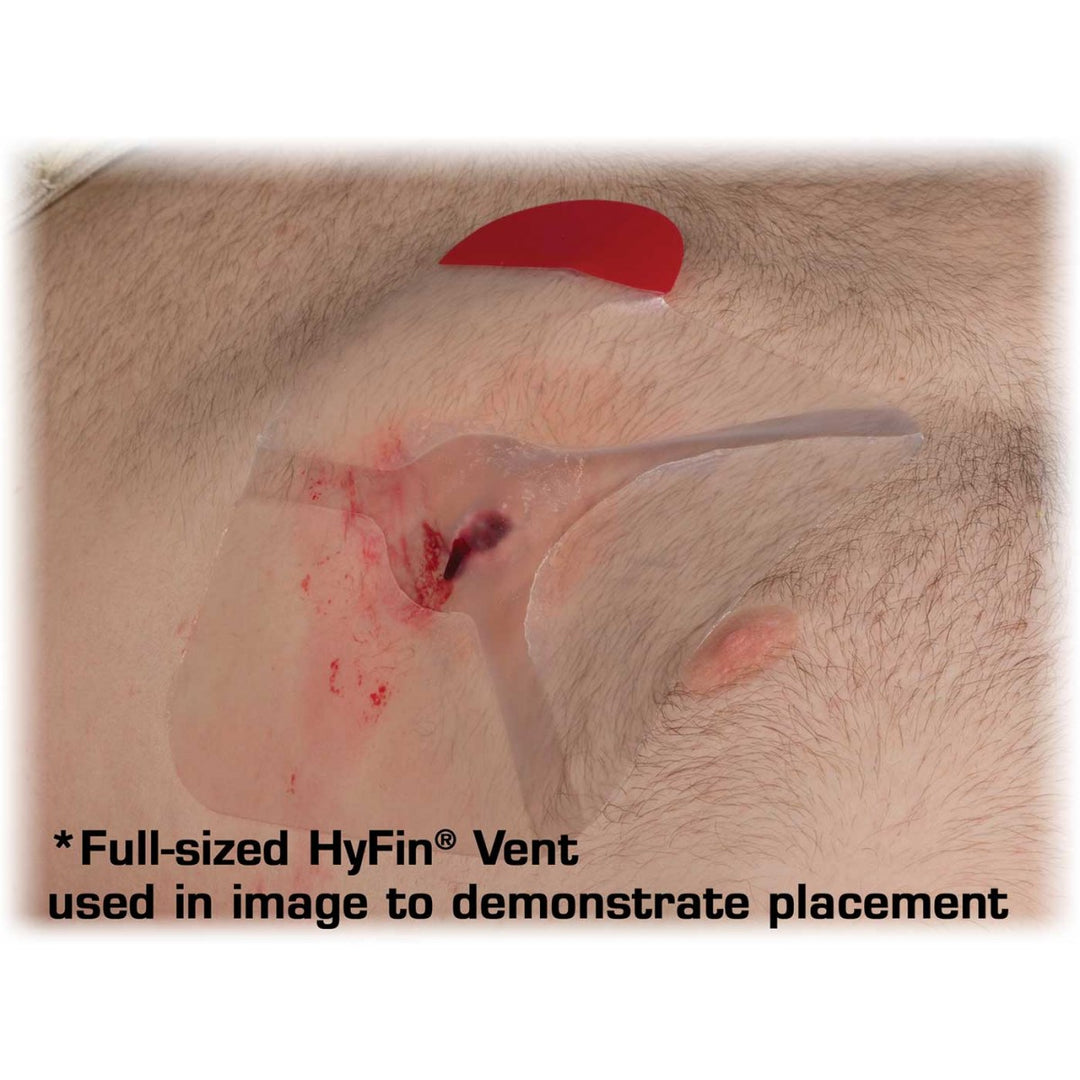
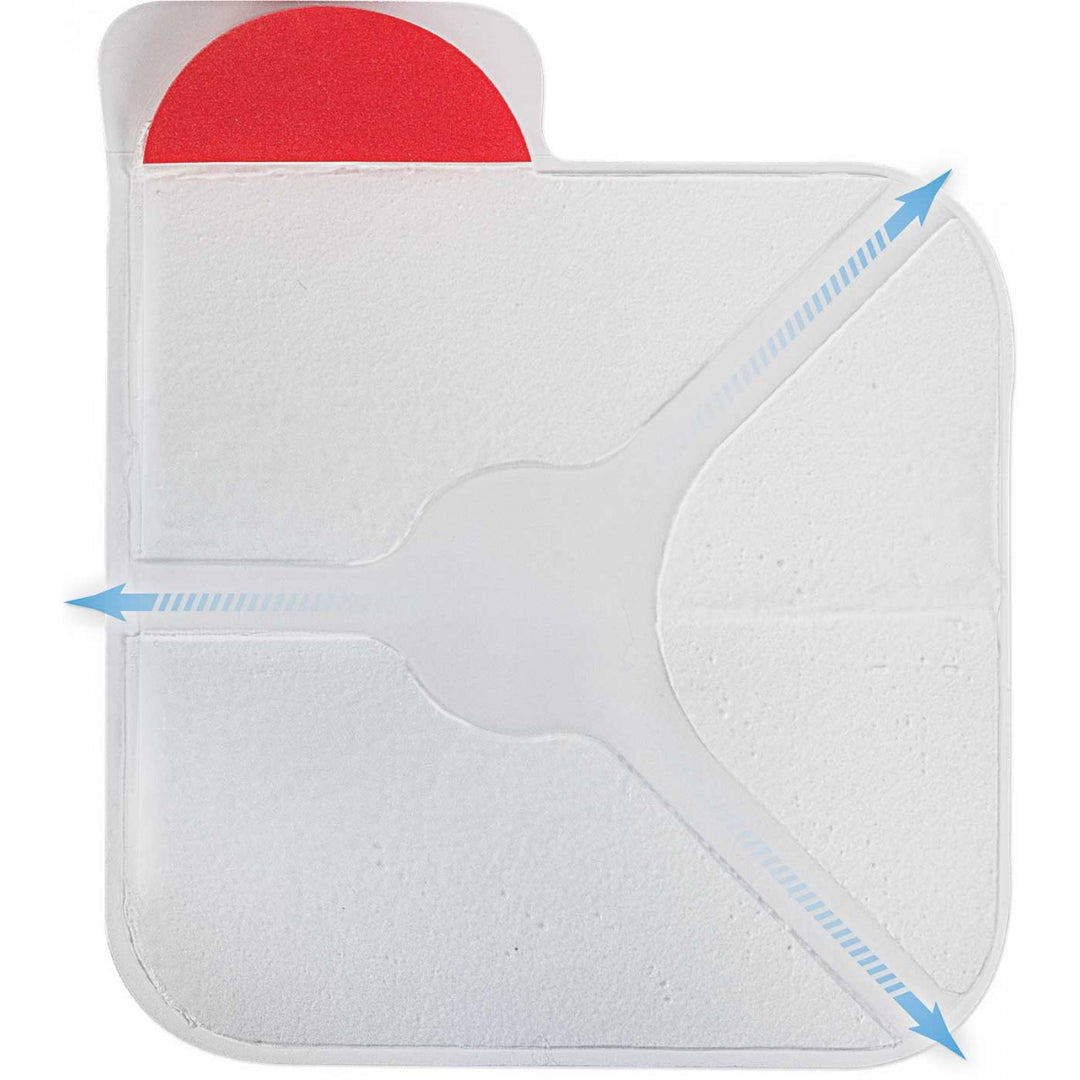
Penetrating chest wounds — from gunshots, stab wounds, or other mechanisms — can allow air into the chest cavity and, without intervention, rapidly progress to tension pneumothorax. The HyFin Vent's three integrated vent channels allow trapped air to escape on exhalation while preventing air from entering on inhalation, addressing this risk at the point of care.
At 12cm x 12cm with a compact folded profile of 17cm x 10cm, the HyFin Vent Compact fits in standard IFAK pouches, trauma kits, and vehicle kits without bulk. The hydrogel adhesive is specifically formulated to maintain adhesion on wet, bloody, or hairy skin — the conditions most likely to be present in a real trauma scenario.
Vented Chest Seal vs Non-Vented Chest Seal
| Feature | HyFin Vent Chest Seal | Non-Vented Chest Seal |
|---|---|---|
| Primary function | Seals chest wound while allowing air to escape | Seals chest wound only |
| Integrated vents | Yes | No |
| Air pressure management | Helps reduce air build-up in the chest | Requires monitoring and manual intervention |
| Application complexity | Simple, one-step application | Simple, but may require reassessment |
| Common use cases | Penetrating chest injuries, trauma response | Basic occlusive wound sealing |
Both vented and non-vented chest seals can be effective when used correctly. Vented chest seals are commonly preferred where air management is a concern.
- Three-channel vented design — allows trapped air to escape on exhalation while preventing air intake on inhalation
- Hydrogel adhesive — maintains adhesion on wet, bloody, and hairy skin
- Compact profile — 17cm x 10cm folded; fits in standard IFAK pouches and trauma kits
- Twin pack — two individually sealed chest seals for entry and exit wound coverage
- 12cm x 12cm seal — sufficient coverage for penetrating chest wounds
- Individually perforated foil pouch — hygienic one-at-a-time access
- Rugged packaging — built for field conditions and extreme environments
- Easy one-step application — self-adhesive, no assembly required
What is a chest seal used for?
A chest seal is used to manage open chest wounds by preventing air from entering the chest cavity through the injury. This helps reduce the risk of breathing complications following penetrating trauma.
What does “vented” mean on a chest seal?
A vented chest seal allows trapped air to escape from the chest cavity while preventing outside air from entering. This helps manage pressure buildup after application.
Why does this come as a twin pack?
Penetrating chest injuries can have both an entry and exit wound. A twin pack allows both wounds to be sealed if required.
Is the HyFin Vent Compact suitable for an IFAK?
Yes. The compact packaging makes it suitable for IFAKs, trauma kits, and vehicle kits where space is limited.
Can civilians use chest seals?
Yes. Chest seals can be used by civilians, but training is strongly recommended to ensure correct application and monitoring.
Do I need training to use a chest seal?
Training is strongly recommended. Chest seals are simple to apply, but understanding when and how to use them correctly is critical.
How long should a chest seal stay in place?
A chest seal should remain in place until advanced medical care is available. Continuous monitoring is important, and any changes in breathing should be addressed according to training and protocols.
Is a chest seal the same as a pressure bandage?
No. A chest seal is designed to manage open chest wounds, while a pressure bandage is used to apply compression to control bleeding elsewhere on the body.
Does this replace professional medical care?
No. Chest seals are an immediate response tool only. All penetrating chest injuries require urgent medical attention.
What is the difference between the HyFin Vent Compact and the standard HyFin Vent?
The HyFin Vent Compact uses a folded profile (17cm x 10cm packaged) that is significantly smaller than the standard HyFin Vent, making it better suited for IFAKs and compact trauma kits where space is limited. Both use the same three-channel vented design and hydrogel adhesive technology. The standard HyFin Vent has a larger seal surface area, which may be preferred for broader wound coverage in clinical or ambulance settings.
📦 Shipping Overview
- Flat rate: $12.95 Australia-wide
- Free shipping: Orders over $250
- Dispatch time: 1–2 business days (Mon–Fri)
🚚 Delivery Estimates
- Metro areas: 3–7 business days
- WA & NT: Up to 10 business days
- During peak or promo periods: Please allow additional time
📍 Delivery Instructions
Please provide a delivery address where someone is available during business hours. PO Boxes are accepted. If unattended, your order may be left in a secure location or taken to the nearest post office or depot.